Performance features
- Fast radio channel creates automatic
feedback in the ring net
- Decentralised alert request
- Confirmation of transmission
- Status check
- Log data can be extensively filtered by
- 18 different criteria
- Date and time from just one second to
infinity
- Simple and fast programming via a web
browser
- Single page GUI
- Independent radio channel allows for partial
parameterization
- Supports two fallback terminals
- Mean time before failure is 7.4 years
- Backwards compatibility with Swissphone
ITC2100 and ITC2000
GT16R controller
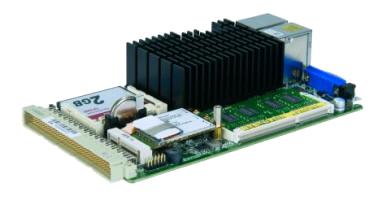
For the ITC2500 Swissphone
have incorporated a new controller that is
substantially more powerful than older units, but
also dramatically improves the overall performance
of the ITC2500 base station. Features include:
-
Can handle a higher core
temperature which makes the unit more robust and
suitable for fan less application
-
Increased computer power
with more memory included
-
The GT16R is backwards
compatible with the AT96 bus standard
-
Virtualisation ability
support
-
64 Bit operation support
-
Integral virus protection
for improved security
-
40nm chip technology
Incredibly advanced fail safe alerting network
solution
Combining a decentralised infeed and a network
status feedback creates the most advanced alerting
network in the world today. Historically
connectivity was only possible to one control
centre, but now its possible to have any number of
input points like municipalities of fire stations
for example that can now be direct coupled to the
alerting network.
As well as standard alerting, its now possible to
have two way communication between the main and the
decentralised control centre via the air interface.
The benefits of using the broadcast method are still
maintained in this way. The solution creates a
highly resilient system through redundancy operation
(standby-ITC) and multiple transmissions.
One advantage of using network status feedback is
that while obtaining conclusive information the
system does not generate excessive traffic. Any
individual base station is able via the air
interface to send back alerting request, broadcast
transmission confirmation as well as its function
state to the control centre.
The decentralised infeed and network status
feedback is the worlds most advanced way of
operating any alerting network.
A modern digital alert network
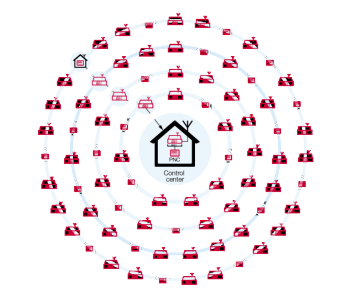
Below is an example of a medium sized radio
network that uses the latest methodology. Using
special procedures the system ensures a
decentralised alerting request is between five to
ten seconds and is reliably transmitted over the
whole network. Also importantly, the base station
feedback in the whole network is also kept to a five
to ten second time window.
Click for larger image
The receipt of twenty five requests for
transmission from fire stations in a given network
with eighty base stations and four rings will be
completed in five to ten seconds. The returned
network status feedback takes approximately the same
time period. The alert job distribution is carried
out with 4800Bd.